Skip the nonsense — here’s the route.
I open a survival guide because I need to know what to do next.
Not because I want a history lesson.
Not because I want atmosphere.
Not because I want the writer to prove they played the game by describing the sunrise.
If the first three paragraphs are lore, flavor text, or “the world is harsh and beautiful,” I’m already gone. Back button. Different tab. Sometimes I just close the whole thing and go test it myself.
This isn’t a personality quirk. It’s a filter.
What a useful guide actually does
A useful guide answers the question the reader is holding in their head right now:
What do I craft first?
Where do I go?
How do I stop dying to this specific thing?
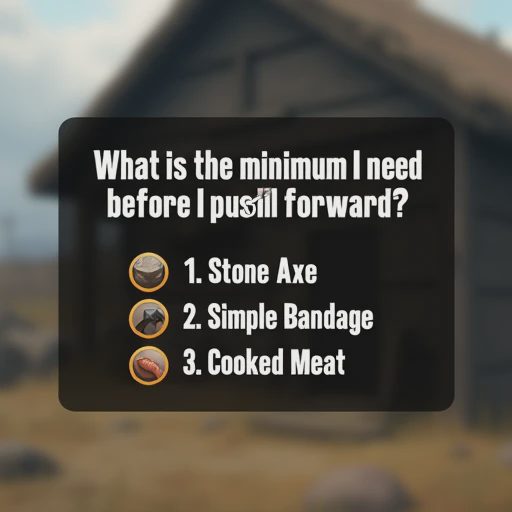
What is the minimum I need before I push forward?
It leads with that answer. Then it explains why. Then it gives the practical steps. Lore, if it appears at all, comes later and only if it changes a decision.
Most guides reverse the order. They warm you up. They set the scene. They ease you into the information like you’re settling in for a short story. By the time the actual advice arrives, the reader who needed it has already lost five minutes and a chunk of patience.
That structure exists because it feels like “good writing” to the person producing it. It does not feel like good writing to the person who just died for the third time and is trying to figure out the correct response.
The standard I hold myself to
Every post on this site is supposed to pass a simple test:
Can a reader in a hurry get the core answer in the first screen?
If the answer is no, the post is broken. I cut it down until it passes. That means:
No opening lore dumps
No multi-paragraph throat-clearing
No “in this guide I will cover” preambles that restate the title
No padding that exists only to make the article look longer
I’m not against flavor. I’m against flavor that sits in front of the information someone came for.
Why this matters more in survival games
Survival-crafting titles already demand attention. You’re managing meters, inventory, threats, and progression all at once. When you alt-tab to a guide, you are usually in the middle of a problem. You do not have spare cognitive budget for a narrative warm-up.
The guides that respect that reality get bookmarked. The ones that don’t get closed.
I’ve wasted enough hours on the second category that I refuse to add to it.
The practical takeaway
If you’re writing guides: put the answer first. Explain second. Story last, if at all.
If you’re reading guides: the moment the text starts painting a picture instead of solving your problem, leave. Your time is worth more than the writer’s need to set a mood.
That’s the entire point of this site.
No lore tax. No warm-up lap. Just the route.
Next post goes back to practical progression. This one needed to be said first.