Skip the nonsense — here’s the route.
Most early-game crafting mistakes aren’t about making the wrong item.
They’re about making the right item at the wrong time.
You unlock a new station, see a long list of possibilities, and start crafting whatever looks useful or cool. An hour later your inventory is full of “nice-to-haves,” your core tools are still weak, and the actual progression bottleneck is still sitting there uncrafted.
Here’s the order I force myself to follow in almost every survival-crafting game. It is not glamorous. It works.
First: The items that multiply your time
Craft these before almost everything else.
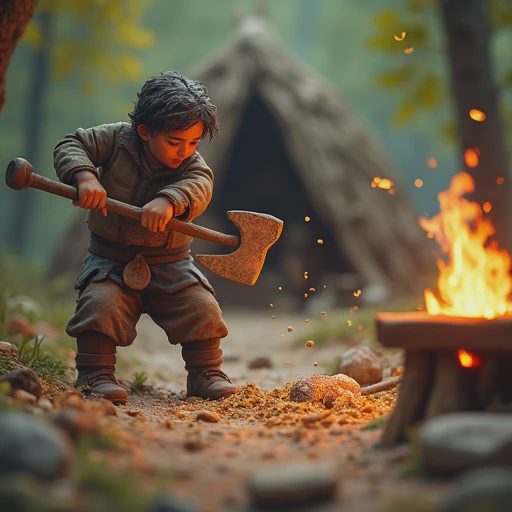
The basic cutting / digging tool upgrade Better axe, pick, knife, or whatever the game uses to turn world resources into inventory. This is the single highest-leverage early craft in most titles. Every future gathering trip gets faster the moment it exists.
The first real weapon or defense tool that matches the primary threat Not the fancy one. The one that lets you reliably handle the common enemies or environmental dangers you’re actually dying to right now.
The core crafting station that unlocks the next tier Workbench, forge, sewing kit, alchemy table — whatever gates the rest of the tree. Get the station online before you start filling it with optional recipes.
These three create speed. Everything else is downstream of them.
Second: The items that stabilize the loop
Once the multipliers exist, craft the things that stop the run from collapsing.
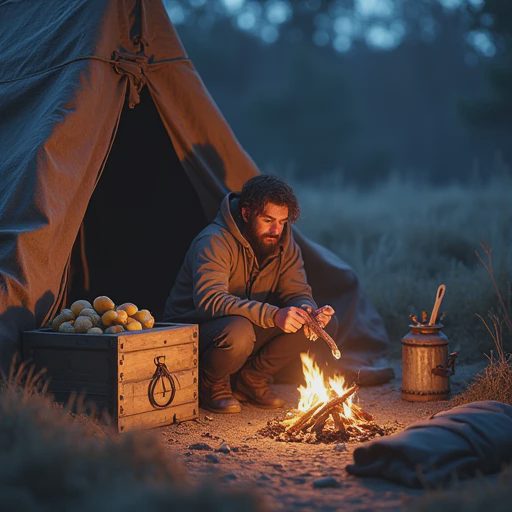
Reliable food source or cooking method that doesn’t require constant babysitting
Basic storage that isn’t a pile on the floor
Sleep / save / respawn point that actually functions
The minimum clothing or armor layer that removes the environmental timer (cold, heat, wetness, etc.)
These don’t make you stronger in a highlight-reel way. They make the next two hours stop being a crisis.
Never early (or at least not until the above are done)
These are the common traps.
Large-scale building pieces and decorative items Walls, floors, and roofs beyond the minimum viable shelter. You’re not ready for a base that looks finished.
Advanced weapons or tools whose material cost is still painful If the recipe eats half your current stockpile and the upgrade is only marginal, wait.
Automation, conveyor, or advanced processing stations These feel like progress. Early on they usually just create a new maintenance chore and lock materials you still need for core upgrades.
Specialty gear for content you haven’t reached Biome-specific outfits, boss-oriented weapons, or luxury quality-of-life items. Craft them when the content is in front of you, not when you’re still fighting the first-night problems.
Extra copies “just in case” One good tool is better than three mediocre ones that ate your resources.
The quick decision test
Before you hit craft, ask:
Does this make my next hour faster or safer in a measurable way?
Does this unlock something I currently cannot do?
Am I crafting this because I need it, or because the menu made it available?
If the answer to the first two is no, put it back.
Practical sequence most games follow
Basic tool upgrade
Minimum survival protection (weapon / heat / shelter)
Core station
Food and storage stability
Next tool or station tier
Only then start looking at the “interesting” recipes
Follow that order and the early game stops feeling like a random craft-a-thon. You always know what the next craft is supposed to achieve, and you stop hemorrhaging materials on things that don’t move the run forward.
Next time the crafting menu lights up with options, ignore most of them. Craft the multipliers first. Stabilize second. Everything else can wait until the foundation is actually finished.