
The Fastest Way to Prep for Your First Real Gear Check

The Fastest Way to Prep for Your First Real Gear Check

Published on

176

views

This article outlines a streamlined method to prepare for your first real gear check in survival-crafting games. Instead of over-farming and falling into the trap of endless preparation, players should treat gear checks like diagnostic tests. By identifying the exact failure, defining minimum viable readiness, running controlled probes, and fixing only the necessary gaps, you can progress faster, avoid inventory loss, and bypass demoralizing grinds efficiently.

Skip the nonsense — here’s the route.

The first real gear check is where a lot of runs quietly die.

It isn’t always a named boss. Sometimes it’s a new enemy type that shrugs off your current weapon, a temperature or damage threshold that turns your old armor into paper, or a resource node guarded by something you can’t cleanly kill yet. Whatever form it takes, the game is asking a simple question: are your tools and defenses actually ready, or have you just been surviving on beginner luck?

Most players answer that question by dying a few times and then over-farming for an hour. There’s a faster way.

Step 1: Identify the exact check

Before you craft or gather anything, name the problem.

  • What specifically kills you or stops you right now?

  • Is it raw damage, a new damage type, environmental pressure, or just time-to-kill that has become too long?

Write it down if you have to. Vague anxiety (“I need better gear”) produces vague preparation. A clear threat produces a short list.
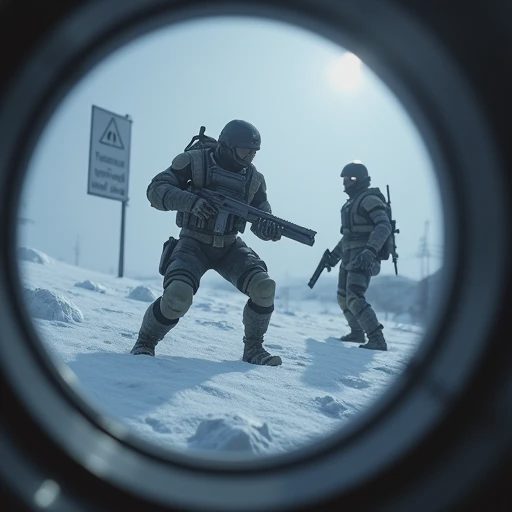
Close-up of a game interface showing a targeted diagnostic check on environmental damage during a survival game encounter.

Step 2: Define minimum viable readiness

You do not need the best possible loadout. You need the cheapest loadout that lets you complete the check without it turning into a resource death spiral.

Ask:

  1. What is the lowest-tier weapon or tool that can handle the common threats here at an acceptable speed?

  2. What is the minimum protection that stops the environment or the main damage type from ending the run on a timer?

  3. What consumables (food, healing, temporary buffs) actually change the outcome of a short engagement?

Everything beyond those three is comfort. Comfort is fine later. Right now it is delay.

Step 3: Run a controlled probe, not a full commit

Take your current best gear and make a short trip with one goal only: gather information.

  • How long do you survive?

  • What resource are you burning the fastest?

  • Which part of your kit fails first?

Then leave. Do not push until you die “to see what happens.” The probe exists to tell you the exact gap, not to test your stubbornness.

A survival player performing a lightweight, controlled reconnaissance probe at the edge of a dangerous zone to gather information.

Step 4: Close only the gaps the probe revealed

Now craft and gather with purpose.

  • If the weapon was too slow, upgrade that.

  • If the armor or resistance was the problem, fix that.

  • If you ran out of healing or food, solve the supply loop.

Resist the urge to “while I’m at it” upgrade three other systems. That is how a 20-minute prep turns into a 90-minute side project.

Step 5: Re-test quickly

Go back with the updated kit. Same short probe. Confirm the previous failure point is now manageable. If a new failure point appears, repeat the cycle. Most first gear checks only need one or two of these loops.

What this prevents

  • Spending an hour farming materials for gear you don’t actually need yet

  • Walking in fully committed and losing a full inventory because you guessed wrong

  • Turning the first real progression wall into a demoralizing grind instead of a controlled step

The mindset

Gear checks are not invitations to perfectionism. They are filters. The fastest players treat them like diagnostic tests: identify the failure, apply the smallest fix that removes it, confirm, then move.

Over-preparation feels safe. Targeted preparation is faster and usually safer in practice, because you spend less time exposed in the intermediate state where you’re neither strong enough for the check nor still efficient in the previous zone.

Next time the game starts signaling that your current kit is no longer enough, don’t open the full crafting list and start dreaming. Name the check. Probe it. Fix the specific gap. Re-test. Then push.

That’s the whole method.

Last updated:

Share:

Leave a comment

Related Articles

When to Push Forward and When to Turn Back in Progression-Based Survival Games

When to Push Forward and When to Turn Back in Progression-Based Survival Games

This article examines how to conquer progression walls in survival-crafting games by mastering the decision to push forward or retreat. Instead of falling into the sunk-cost trap and wasting valuable time on doomed exploratory runs, players should evaluate their meters, resource extraction efficiency, and return paths. By applying a ten-second practical decision loop and treating deep-zone excursions as calculated investments, you can progress faster, avoid catastrophic item losses, and survive more efficiently.

155
Boss Prep Without Overgrinding: Minimum Viable Readiness Explained

Boss Prep Without Overgrinding: Minimum Viable Readiness Explained

This article explains how to conquer bosses in survival-crafting games without falling into the trap of over-grinding. Instead of wasting hours farming endless gear and consumable stacks, players should aim for minimum viable readiness by evaluating five key areas: damage, survival, sustain, information, and recovery cost. By testing your loadout early, fixing only actual failures, and treating the first attempt as a learning probe, you can progress faster and bypass tedious preparatory grinds.

146
The Biome Wall Checklist I Wish More Players Used Before Blaming the Game

The Biome Wall Checklist I Wish More Players Used Before Blaming the Game

This article explains how to overcome biome walls in survival-crafting games by running a structured diagnostic check instead of blaming game balance. When hitting a new region, players often struggle with hidden readiness gaps rather than simple stat checks. By evaluating environmental pressure, enemy viability, sustain loops, extraction routes, gear gates, and information state, you can quickly find the real bottleneck, fix the exact issue, and progress efficiently without unnecessary frustration.

147
How to Know You’re Underprepared for the Next Biome Before the Game Punishes You

How to Know You’re Underprepared for the Next Biome Before the Game Punishes You

Stop walking blindly into dangerous new biomes and dying to unseen threats. In survival crafting games, progression walls are not random surprises—they are readiness checks. This guide provides a practical six-step pre-biome checklist to test your environmental protection, combat viability, and supply loops. Learn how to run safe scouting probes, fix your logistics gaps, and transition smoothly into harder areas without wasting time or losing your gear.

157