Skip the nonsense — here’s the route.
Your first base is temporary. Treat it like one.
Most players build their opening shelter as if it’s going to last the entire playthrough. They drop a full set of workstations, expand outward in every direction, and then spend the next four hours tearing it down and moving because the location was bad, the layout was inefficient, or they locked themselves into a resource loop that no longer works.
That rebuild tax is avoidable.
The goal of a starter base is not comfort or aesthetics. It is speed: get the essential crafting loops running, protect yourself through the first few nights, and keep the option to relocate open without feeling like you’re abandoning a fortress.
The only things a starter base actually needs
A safe place to sleep or wait out the lethal part of the cycle Roof + walls that stop the primary threat. Nothing more.
The core crafting stations you will use in the next 2–3 hours Usually the first-tier workbench, a fire or cooking source, and maybe a basic storage container. Everything else can wait.
A short, clean path between storage, crafting, and the main resource direction You should be able to drop materials, craft, and leave again without weaving through extra rooms you built “just in case.”
That’s the list. If your starter layout has more than those three functions, you overbuilt.
Layout rules that actually matter early
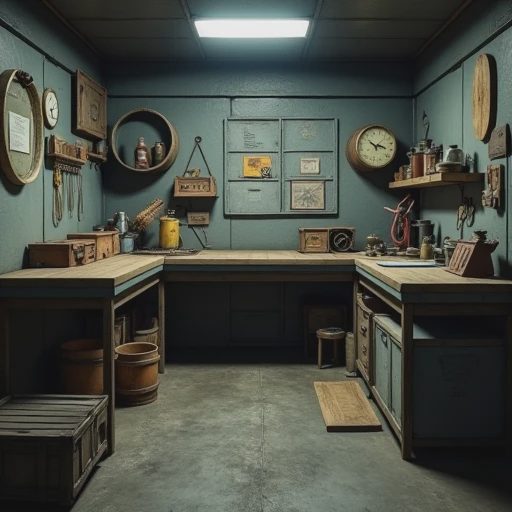
Keep it small. A compact footprint is easier to defend, faster to expand later, and cheaper to abandon. Big empty rooms feel productive. They aren’t.
Place storage next to the main crafting station. The loop is: walk in → dump materials → craft → walk out. Every extra step you force yourself to take in the first few hours adds up.
Orient the entrance toward your primary early resource direction. If most of your wood, stone, or food is coming from the north, don’t put the door facing south “because it looks better.”
Leave clear expansion space on one side only. Pick a direction you can grow into later if the location turns out to be good. Do not surround the starter building with future plans on every side. That just makes relocation painful.
Do not commit to permanent defenses yet. Spike walls, full perimeter fencing, and advanced traps belong to the second base, not the first. Early defenses should be the minimum that stops you from dying tonight.
When to move
You should already be thinking about the next location by the time you have reliable food, basic tools, and a couple of key crafting unlocks. Signs it’s time:
The local resources are thinning faster than you can expand the gathering radius.
A better biome or resource node is clearly visible and reachable.
Your current layout is forcing long walking loops every time you craft.
You keep saying “I’ll fix the base later” while still dying to the same problems.
Moving early feels like wasted effort. Staying too long is the real waste.
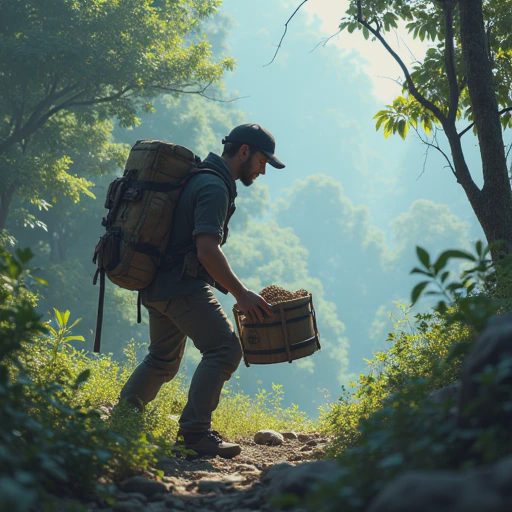
The practical sequence
Survive the first night with the absolute minimum shelter.
Drop the core stations the next day.
Run efficient resource loops for a few hours.
Evaluate the location against the next progression goal.
Either expand cleanly in one direction or pack the essential stations and relocate.
That’s it.
Your first base exists to buy you time and options. It is not a monument. Build it like a temporary workshop, not a forever home, and the mid-game transition stops being a full rebuild and starts being a controlled upgrade.
Next post will cover what to craft first, second, and what to deliberately leave for later.