Skip the nonsense — here’s the route.
The biggest early-game time sink in most survival-crafting games isn’t dying.
It’s farming resources you don’t actually need yet.
You spawn. You punch a few trees. You think, “I should stockpile.” Ten minutes later you’re still chopping, still mining, still filling every inventory slot with wood, stone, fiber, and whatever else the ground is offering. Your shelter is still a sad lean-to. Your tools are still tier-zero. Night is coming. And you’ve just spent the most valuable window of the run making sure you’ll have plenty of materials… for a base you haven’t designed and crafts you haven’t unlocked.
This is the trap.
Why it feels productive (and why it isn’t)
Gathering is simple. It gives clear numbers. The inventory fills up. You feel like you’re “preparing.”
But early-game time is not measured in stacks of wood. It’s measured in how fast you reach the next decision point: better tools, a functional crafting loop, a safe overnight spot, or the first real progression unlock.
Every minute you spend over-farming before those things exist is a minute you could have spent unlocking them.
Most games quietly punish this behavior:
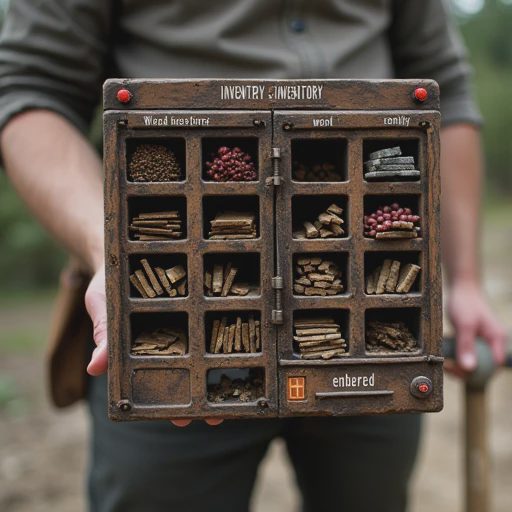
Inventory fills with low-value junk and you start dropping or ignoring higher-priority items.
You delay the first tool upgrade, which makes every future gathering trip slower.
You build a storage problem before you have a storage solution.
Night hits and you’re still under-geared because you were busy being “efficient” at the wrong thing.
The rule I use instead
Farm only what the next 30–60 minutes actually requires.
That’s it.
Before you start a gathering loop, ask:
What am I trying to craft or build in the next hour?
Exactly how much of each material does that take?
Do I already have a safe place to store the overflow, or am I about to create a new problem?
If you can’t answer those three questions cleanly, you’re not farming. You’re hoarding.
Practical early-game limits
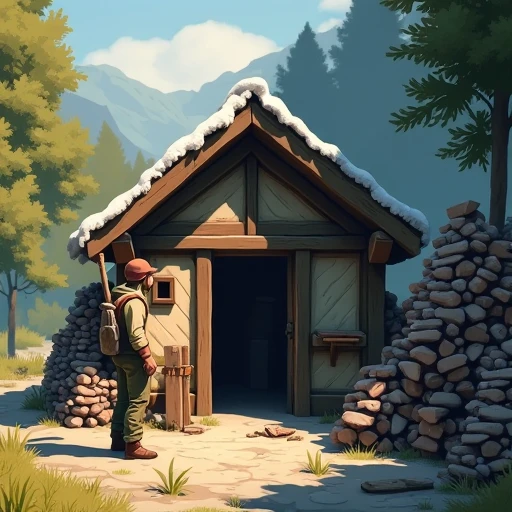
Wood / basic building mats: Enough for the minimum viable shelter and the first workbench. Not enough for a mansion.
Stone / ore: Enough for the next tool tier or the station that unlocks it. Stop once that craft is possible.
Fiber / cloth / early organics: Enough for the bedroll, the first clothing layer, or the immediate survival item. The rest can wait.
Food: Enough to cover the next night or two at your current burn rate. Stockpiling perishables before you have preservation is usually a waste.
Once the next crafting tier or the next station is online, then you expand the gathering radius and the stack sizes. The efficiency multiplies because better tools and better storage make the same time investment produce more.
The mindset shift
Early game is not about maximum resources.
It’s about minimum resources that unlock the next capability.
Players who internalize this stop looking busy and start moving. Their first night is calmer. Their first real base goes up faster. They hit the first biome wall or gear check with actual preparation instead of a warehouse full of tier-1 junk.
Next time you load a fresh save and feel the urge to “just gather a bit more,” stop. Check what the next concrete step actually costs. Gather that. Craft it. Then reassess.
Everything else is just filling time until the game punishes you for being late.