
Skip the nonsense — here’s the route.
When a new survival-crafting game drops, the first hour sets the tone for everything that follows. Wasted movement, bad inventory decisions, or an overbuilt starter shelter in the wrong spot create friction that lasts far longer than the opening night.
This is the exact blueprint I run on virtually every fresh title. It is deliberately simple. Complexity comes later.
Minutes 0–15: Answer the critical questions
I do not start gathering the moment I spawn. I spend the opening window on information.
What is the primary threat that can end the run tonight? (cold, hunger, hostiles, darkness, etc.)
What single resource is the clear priority for the next immediate crafts?
Where is a safe-enough overnight position I can reach and secure quickly?
How punishing is inventory space going to be?
Is there an obvious early progression gate visible from the starting area?
What am I deliberately ignoring for the first hour?
I move while I answer these, but the goal is clarity, not a full inventory. By minute 15 I want a short mental (or written) list of the next concrete actions.
Minutes 15–35: Secure the minimum viable overnight kit
With the questions answered, I execute the shortest path to not dying when the cycle turns.
Typical order:
Basic cutting or gathering tool if the starting one is too slow.
Minimum materials for a functional overnight shelter or protected spot.
The core defensive or environmental item that counters the primary threat (torch, basic weapon, clothing layer, etc.).
Enough food or water to cover the first night at a conservative burn rate.
I stop gathering a resource the moment I have enough for the current step. No stockpiling “just in case” while the actual kit is still incomplete.
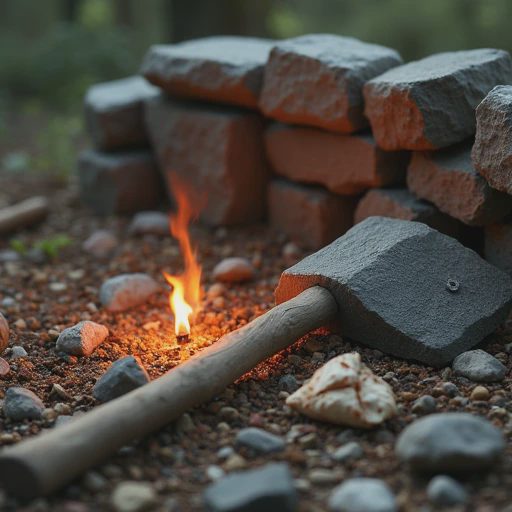
Minutes 35–50: Establish the first stable loop
Once overnight survival is realistic, I shift to the first repeatable cycle.
Drop the first real storage solution if the game allows it.
Get the primary crafting station online if it is not already.
Run one clean gathering route for the materials that feed the next tool or station upgrade.
Clear obvious inventory junk so space remains usable.
The goal here is not a finished base. It is a loop I can repeat without panic: leave → gather targeted materials → return → craft or deposit → leave again.
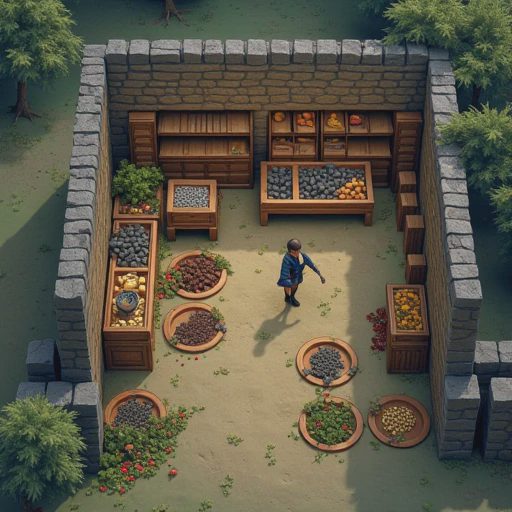
Minutes 50–60: Evaluate and set the next objective
I use the last window of the first hour to make a deliberate decision instead of continuing on autopilot.
Is the current location good enough to support the next 2–3 hours, or should I plan an early relocation?
What is the single highest-leverage craft or unlock available now?
What is the next scouting or progression direction?
I end the first 60 minutes with a clear “next thing,” not with a vague sense that I should keep collecting.
What I refuse to do in the first hour
Build more shelter than the minimum needed to survive the primary threat.
Fill inventory with materials that have no immediate recipe.
Craft optional or luxury items just because the station allows them.
Wander without a purpose once the overnight kit is secure.
Commit to a large permanent-looking base before basic tools and a stable food loop exist.
Why this sequence works
It forces information before volume.
It forces survival before expansion.
It forces a clean loop before optimization.
It ends with a decision instead of inertia.
Most failed or frustrating openings come from reversing that order: heavy gathering first, big building second, actual threats and progression gates last. By the time the player looks up, the first night is already a mess and the second day starts in recovery mode.
Run the blueprint cleanly and the second hour begins from a position of control instead of cleanup. That single difference compounds for the rest of the early game.
Next time a new survival title launches, start the clock. Follow the sequence. Adjust only when the game itself proves a step unnecessary. Everything else is just noise.