
Skip the nonsense — here’s the route.
Most players lose the first night before they even realize it started.
They spend the opening minutes punching trees, picking up every rock, building a random lean-to, and then wonder why they’re starving, freezing, or getting chased by something they can’t kill at minute 45. The problem isn’t usually mechanics. It’s that they never answered the basic questions that decide whether the first night is survivable or a restart.
Here are the seven questions I force myself to answer in the first 15 minutes of any new survival-crafting game. Do this and the rest of the opening hours become much cleaner.
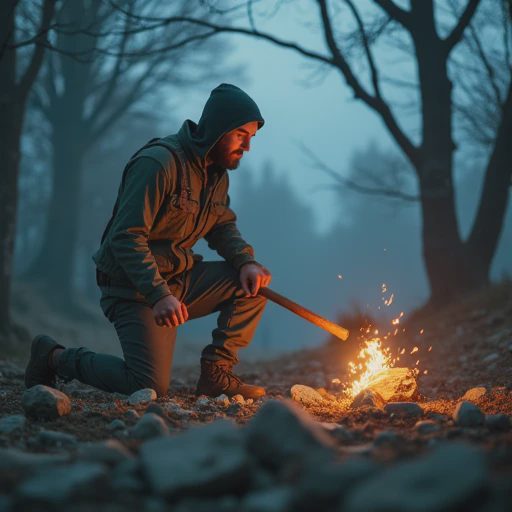
1. What actually kills me tonight?
Hunger? Cold? Hostiles? Thirst? Fall damage? Darkness itself?
Identify the primary threat in the first few minutes. Everything else is secondary until that threat is managed. If the game has a day-night cycle that turns lethal, your entire first-hour plan revolves around beating the sun (or the clock).
2. What is the single highest-priority resource right now?
Not “everything.” One thing.
Is it wood for a basic tool and fire? Fiber for a bedroll? Stone for a weapon? Food that doesn’t spoil in ten minutes? Whatever the answer is, that resource gets the first focused gathering loop. Everything else waits.
3. Where is the nearest safe-enough overnight spot?
You do not need a perfect base. You need a place that stops the primary threat long enough for you to reset. A rock overhang, a shallow cave, a cleared hilltop, a ruined building — something that buys you time. Scout it early. Mark it mentally. Do not keep wandering once the clock is against you.
4. What is the minimum viable shelter/tool set for night one?
List the absolute smallest set of items that lets you survive the first night without restarting.
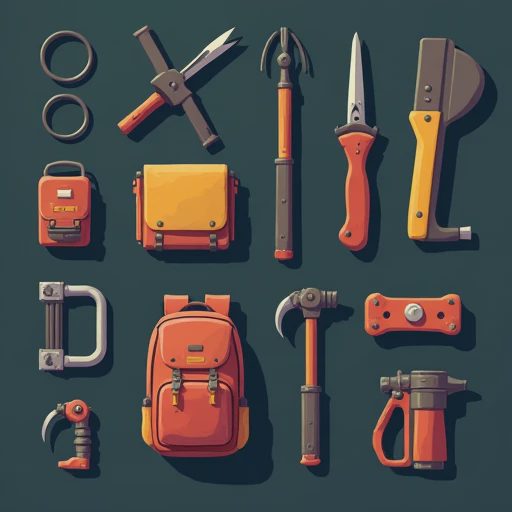
Usually it’s some combination of: basic cutting tool, heat source or protection, a place to sleep or wait out the dark, and enough food/water to not die. Build or craft only those. Ignore the “nice to have” station that costs half your inventory.
5. How bad is inventory pressure going to get?
Most survival games punish early inventory bloat hard.
Decide now what you will pick up and what you will leave on the ground. Priority order: tools and weapons first, critical crafting mats second, food that lasts, everything else last (or never). If your pockets are already full of junk at minute 12, you already failed this question.
6. Is there an early progression gate I can see from here?
A locked door, a higher-tier resource node, a hostile that drops a key item, a crafting station that requires a specific material — anything that clearly sits one step beyond the absolute basics. You don’t have to reach it tonight. You just need to know it exists so your gathering doesn’t completely ignore the path toward it.
7. What am I deliberately not doing in the first hour?
This is the one most people skip.
Write it down if you have to: “I am not building a full base. I am not exploring the whole map. I am not crafting the fancy early weapon. I am not farming every bush.” Deciding what to ignore is often more valuable than deciding what to chase.
Answer those seven questions cleanly in the first 15 minutes and the rest of the opening night becomes a series of small, controlled decisions instead of panic. You’ll still make mistakes — every new game has them — but they won’t be the expensive ones that force a restart or a complete rebuild three hours later.
Next time a new survival title drops, open a fresh save, start the clock, and run this list. Everything after that gets easier.