Looking for the glasshouse Stardew Valley players use to grow crops year-round? The game calls it the Greenhouse. Unlock it by completing the Community Center’s Pantry bundles or by purchasing the Greenhouse repair through the Joja Community Development Form. Once it’s repaired, plant any season’s crops inside, add sprinklers, and stop rebuilding your entire farm every three months.
Skip the nonsense — here’s the route: work toward the Pantry from spring onward, save the items each bundle asks for, and get quality sprinklers ready before the repair. If you chose Joja, focus on earning the repair fee instead.
Unlock the glasshouse Stardew Valley calls the Greenhouse
On the standard Community Center route, completing all six Pantry bundles repairs the Greenhouse overnight. The Pantry includes spring, summer, and fall crop bundles, plus the Quality Crops, Animal, and Artisan bundles. You don’t need to finish every bundle in the Community Center for this repair; the Pantry is the target.
The seasonal crop bundles are the early trap. Check their requirements as soon as the Pantry becomes available, and set aside the requested crops instead of selling everything. If you miss a seasonal crop, the Traveling Cart can occasionally offer one, but its stock is random. That’s a backup, not a schedule.
For the standard Quality Crops Bundle, you need three of these four groups: five gold-quality parsnips, five gold-quality melons, five gold-quality pumpkins, or five gold-quality corn. Corn grows in both summer and fall, giving it a longer window. Plant extra seeds and use fertilizer to improve your odds of getting gold-quality harvests; fertilizer doesn’t guarantee them.
The Animal and Artisan bundles give you choices within their item lists. You don’t need every item shown, so use what your farm can produce rather than chasing an unnecessarily complete collection. Check the bundle screen before selling animal products or processing them into artisan goods.
On the Joja route, buy a Joja membership and purchase the Greenhouse repair for 35,000g through the development form. The membership itself costs 5,000g. This route replaces the Community Center bundles with paid projects, so make that choice deliberately; you can’t complete the Community Center after purchasing the membership.
If you selected remixed bundles when starting your save, requirements can differ from the standard Pantry list. Open your own bundle screen and plan around what’s actually there. Old notes from another farm won’t make your crops count.
Set up watering before you plant
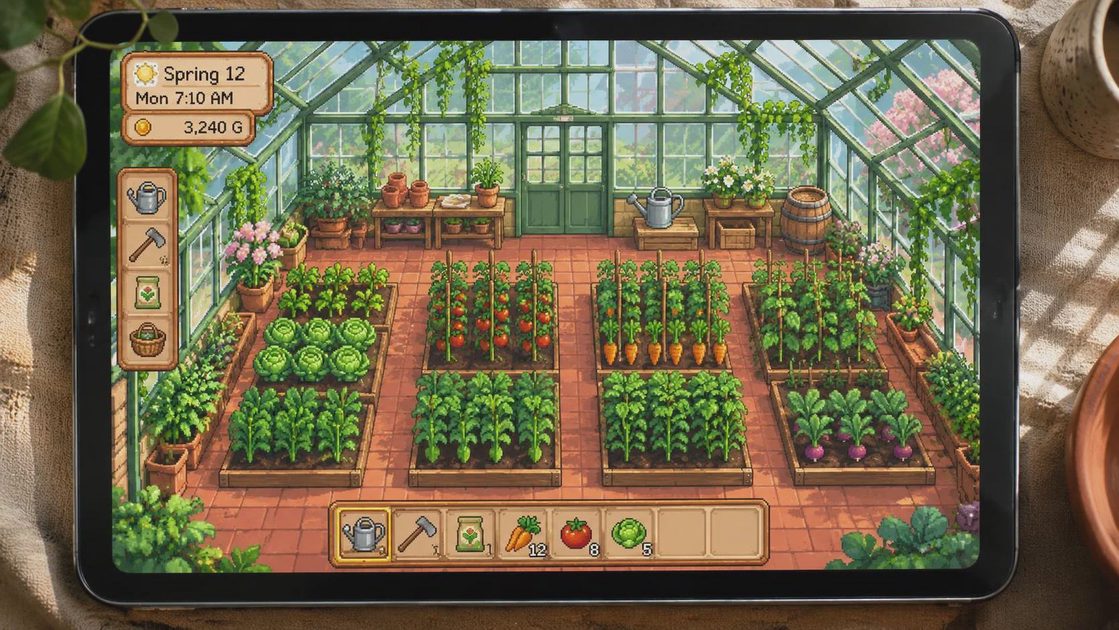
The central growing area contains 120 tillable tiles arranged in a 10-by-12 rectangle. Crops inside don’t depend on the outdoor season, and they won’t die when the season changes. They still need water, and crops that grow on trellises still block movement.
For a practical glasshouse Stardew Valley layout, use sprinklers to cover the soil and leave as many tiles open for crops as your resources allow. Quality sprinklers are a solid first setup: each waters the eight adjacent tiles. Some sprinklers may need to sit on soil until you have better equipment or a more efficient arrangement.
Iridium sprinklers water a 5-by-5 area around each sprinkler. A common efficient arrangement uses six, with some placed on the wooden border next to the soil. This leaves most of the growing area available for crops. Placement matters: before planting, count the rows and check that every intended tile is covered. A dry corner is an annoying way to discover an off-by-one error.
If you’re still watering by hand, start with a smaller planting that your watering can and energy bar can handle. The Greenhouse is valuable because it removes seasonal pressure, not because you must fill all 120 tiles on day one. Add sprinklers as materials permit.
Pick crops that earn their space
For a first glasshouse Stardew Valley crop, choose something you can obtain reliably and afford to plant at scale. Cranberries and blueberries regrow after their first harvest, which means fewer trips for replacement seeds. They’re useful starting options, especially if you already saved seeds from their respective seasons.
Ancient fruit is a strong long-term choice once you have seeds. It takes time to establish, but mature plants keep producing without replanting. Use a Seed Maker to turn some harvested fruit into more seeds, then gradually replace less valuable crops. Processing fruit into wine can increase its value, though kegs take time and materials; don’t let an unfinished keg shed delay planting.
Starfruit is another valuable option, particularly if you can regularly buy seeds from the Desert. Unlike ancient fruit, it must be replanted after harvest. That makes it a good fit when you have cash for seeds and don’t mind the extra work. Hops can also be productive for processing, but their trellises restrict movement. Plant them in accessible rows rather than sealing yourself away from the harvest.
Mixing crops is fine while you build up seed stock. The first goal is consistent production, not a perfect screenshot. Leave room to walk around trellises and reach anything you need to replant.
Add fruit trees without sacrificing crop soil
Fruit trees can grow in the Greenhouse outside the central soil plot, including along suitable tiles around its edge. Once mature, they produce fruit every day indoors, regardless of season. They need their usual clear space while growing, so plan tree positions carefully and don’t crowd saplings with decorations or other objects.
Trees take 28 days to mature. That makes an early sapling useful if you can afford one, but don’t empty your wallet on an orchard before covering seeds, watering, and basic farm upgrades. Start with one or two trees and expand when the farm can absorb the cost.
For your glasshouse Stardew Valley setup, remember that sprinklers handle crops, not tree placement. Verify each sapling has room before buying the next. Once the layout is working, your weekly routine is simple: harvest regrowing crops, refill kegs as capacity allows, and collect tree fruit. The building does the season-skipping; your job is not to turn it into another daily chore.